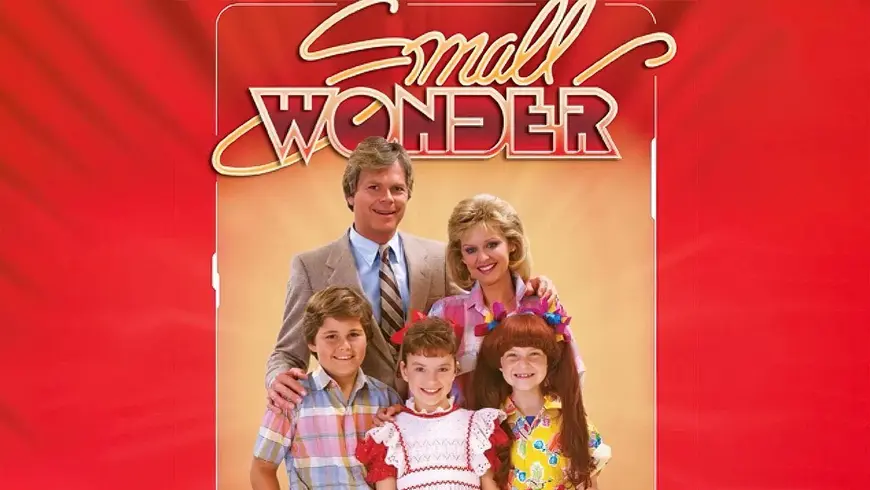
The famous 90s TV serial Small Wonder still refreshes childhood memories even today. The innocence of that robot girl named Vicki and her unique antics would amaze us every time. Watching Ted Lawson try to hide her from the world, along with her fun chemistry with the family, was a joy in itself. Every episode had laughter, a lesson, and a touch of magic that kept us glued to the TV. Back then, it wasn’t just a show it became an important part of our memories, and even today, thinking about it brings a smile to our faces.
Small Wonder was a very popular American science-fiction sitcom from the 1980s, which aired in India during the 1990s on Star Plus in a Hindi-dubbed version. The story revolves around a robot girl named “Vicki,” created by a robotics engineer, Ted Lawson, who lives with the family and creates humor with her extraordinary abilities.
Small Wonder is an American science-fiction television series that originally aired from September 7, 1985, to May 20, 1989. The show revolves around the family of a robotics engineer who secretly creates a robot modeled as a young girl and keeps her at home as his daughter. Although the show was initially produced for Metromedia Productions, the rights were later acquired by 20th Century Fox Television in 1986.
It was broadcast in India on Star Plus from 1994 to 1998, dubbed in Hindi. Over 900 episodes of this 90s show aired, of which around 100 episodes were shown in India. 90s kids in India had limited access to American television shows but one show that we were blessed with, and which still evokes a sense of nostalgia was Small Wonder. The story of the Lawson family who adopt an android girl named Vicki was equal parts science fiction and comedy.
Why Small Wonder Became a Timeless Favorite for Indian Audiences in the 90s
Small Wonder has a huge fan base all over the world but it has a special place in the heart of the Indian audience. The 90s brought in a revolution on television. We were moving past Doordarshan and with the introduction of new content, there was an increasing interest in shows like Small Wonder and Bewitched that were broadcast with Hindi dubbing.
In the show, Ted Lawson is a robotics engineer who creates an Andriod in the form of a human girl and to acclimatise her to regular life, he brings her home. She gets the name Vicki and is treated like Ted and Joan’s daughter. Joan treats Vicki like a real person and this translates to her son Jamie as well.
The show depends on Vicki’s lesser understanding of the real world which provides the laughs for the major part of the show. Her ability to learn fast and her physical strength is often highlighted in the show.
Main Characters of the Small Wonder TV Series:
- Vicki (Tiffany Brissette): A robot girl with super strength, high speed, and electric-like eyes.
- Ted Lawson (Dick Christie): Robotics engineer and father.
- Joan Lawson (Marla Pennington): Ted’s wife and mother.
- Jamie Lawson (Jerry Supiran): The son of the Lawson family.
- Harriet Brindle (Emily Schulman): The neighbor girl who didn’t like Jamie but was suspicious of Vicki.
The Small Wonder show ran from 1985 to 1989, entertaining audiences for four full years. The series was directed by Howard Leeds. Along with Tiffany Brissette, the main cast included Jerry Supiran, Dick Christie, Marla Pennington, Emily Schulman, and William Bogert. After becoming a hit in the United States, it was broadcast in India in Hindi, where it was equally well received.
Small Wonder: A 90s Favorite TV Serial That Captured Hearts
Small Wonder is an American comedy science-fiction series. The show originally aired from September 7, 1985, to May 20, 1989. More than a decade later, the series was broadcast on Star Plus in India. It is a comedy sci-fi sitcom produced by Howard Leeds and directed by Peter Baldwin and Bob Claver. Starring Linda Day, Selig Frank, and Leslie H. Martinson, the show was produced by Bud Grossman and Bruce Taylor, with Howard Leeds serving as the executive producer. Small Wonder tells an exciting story centered around a robot disguised as a ten year old girl.
Ted Lawson is an inventor and engineer at United Robotics who created this robot. The robot’s name is VICI, which stands for “Voice Input Child Identical.” Lawson calls her Vicki. He originally designed the robot to assist children with disabilities. Vicki came to the Lawson home to learn about human surroundings. Her abilities are extraordinary; her right hand has superhuman strength and speed.
The Lawson family never reveals the truth about Vicki’s creation and keeps it a secret. However, their neighbors are never fully convinced and remain suspicious, which often causes trouble for the family. Whenever Vicki behaves unexpectedly, all the neighbors start to suspect something especially Harriet, who lives next door. Her father works with Lawson, and Harriet constantly notices strange things about Vicki and expresses her doubts. In the Small Wonder show, much of the humor comes from Vicki’s attempts to learn human behaviors and the unexpected troubles that arise from her actions.
Why It Was a 90s Favorite
- Unique Concept – Unlike other family sitcoms of its time, Small Wonder combined technology and family dynamics in a fun, imaginative way.
- Memorable Humor – The show’s comedy came from Vicki’s robotic misunderstandings, Jamie’s schemes, and Ted’s frantic attempts to keep everything under control.
- Family-Friendly Appeal – Parents could enjoy the clever writing, while kids loved Vicki’s antics, making it perfect for family viewing.
- Cultural Impact – Vicki became an iconic character, and the show is remembered nostalgically for its unusual charm and futuristic premise.
Legacy
Even decades after it ended, Small Wonder continues to hold a place in pop culture as a symbol of 80s and 90s television creativity. It inspired discussions about robotics and artificial intelligence in everyday life long before such topics became mainstream. Reruns on cable networks in the 90s introduced the show to a new generation, cementing its status as a small but unforgettable part of TV history.
Small Wonder remains a delightful example of how imaginative storytelling and relatable family dynamics can transcend time, proving that even a robot child can steal the hearts of millions.