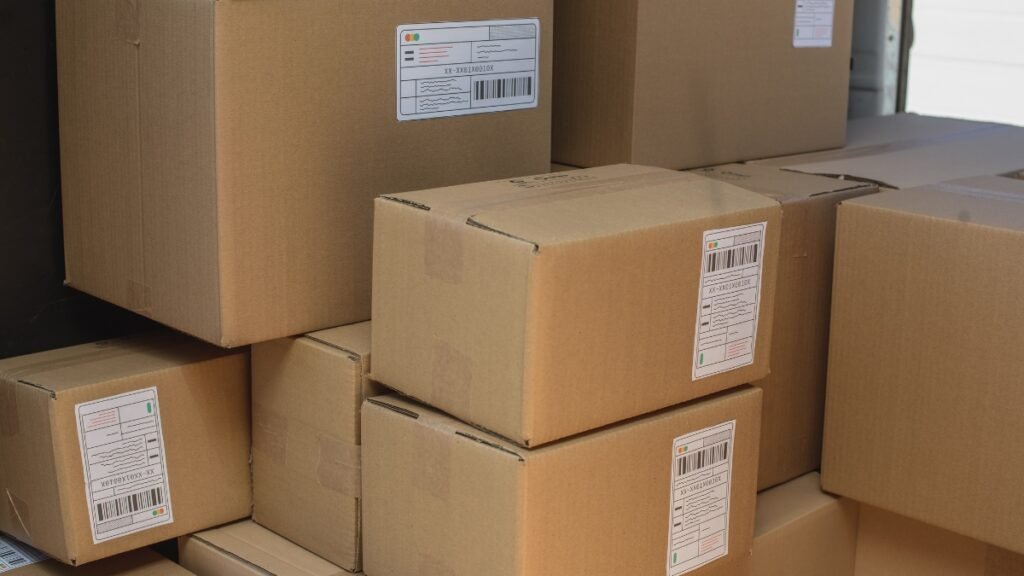
For a direct-to-consumer brand, a damaged delivery costs far more than the product inside it. There is the refund, the reverse logistics, the replacement dispatch — and then the invisible cost: a customer who unboxed a dented carton rarely reorders, and increasingly posts the photo. Industry estimates put transit damage at 1–3% of Indian e-commerce shipments, and packaging engineers agree on the primary culprit. It is not rough handling. It is the wrong sized box.
Why oversized boxes break products
A product that can move inside its box becomes a hammer against its own walls. Every centimetre of empty space is acceleration room during sorting-hub drops, and void fill added as an afterthought crumpled paper, a token air pillow compresses on the first impact and stops protecting by the second. The counterintuitive truth of protective packaging is that a snug 3 ply box usually outperforms a roomy 5 ply one.
The fit first method
Well run D2C operations now design packaging backwards from the product. They measure the product with its primary packaging, add 5–10 mm per side for cushioning where genuinely needed, and order custom mailer boxes cut to those dimensions rather than forcing every SKU into one universal carton. Mailer-style boxes, which fold to shape and self-lock, hold products firmly without tape-heavy wrapping and open flat for a clean unboxing.
What the data from returns tells you
Your returns dashboard is a free packaging consultant. Tag every damage return for one quarter by SKU and box size, and patterns appear fast: the candle brand shipping in leftover apparel boxes, the electronics accessory rattling in a pouch inside an oversized carton. Brands that run this exercise typically find 70% of damage concentrated in two or three SKU-box mismatches fixable with one purchase order. Set a quarterly reminder to repeat the exercise, because catalogues drift: new SKUs arrive, suppliers tweak product dimensions, and last year’s perfect box family slowly stops fitting the products you actually sell today.
A 30 day pilot any brand can run
Proving the case does not need a consultant. Pick your single highest-damage SKU. For thirty days, ship half its orders in the current box and half in a right-sized box ordered as a short custom run most manufacturers will produce a few hundred pieces. Track three numbers per group: damage complaints, courier charge per shipment, and packing time. Brands running this pilot usually see the damage gap within two weeks and the courier saving on the first invoice, which makes the board-room conversation about re-boxing the whole catalogue a formality.
Board grade still matters at the edges
Right-sizing does not eliminate the need for the correct board. Anything above roughly 2 kg, glass, ceramics, or export parcels that will be re-handled at consolidation hubs deserve 5 ply construction; light apparel and cosmetics travel safely in 3 ply. A factory direct corrugated box manufacturer can advise on GSM and bursting strength for a specific product and courier lane, and produce short custom runs something marketplace box listings, sold generic and by the hundred, cannot do.
The margin case
Right-sizing pays twice. Volumetric courier pricing means a box that is 3 cm smaller on each side often drops a full weight slab, saving ₹8–15 per shipment at scale. Combine that with a damage rate falling from 2% toward 0.5%, and a brand shipping 5,000 orders a month recovers lakhs annually — from a change customers experience as better, not cheaper.
The brands winning Indian e-commerce in 2026 obsess over conversion rates and ad spend, but the last metre of their supply chain is corrugated board. Getting the box right is the cheapest quality upgrade in the business.