India has always had a strong culture of giving. What is changing is how people give and how easily they can support the causes they care about. Digital payments have made giving simpler and faster, while greater access to information is helping people discover social causes and organisations working on them.
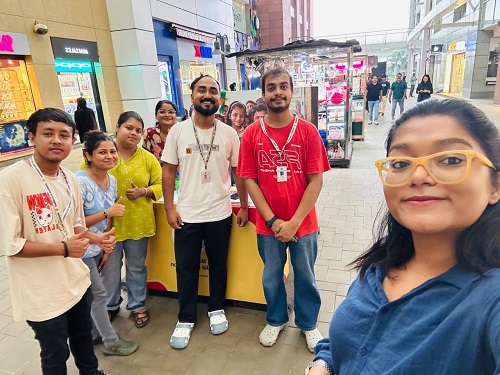 |
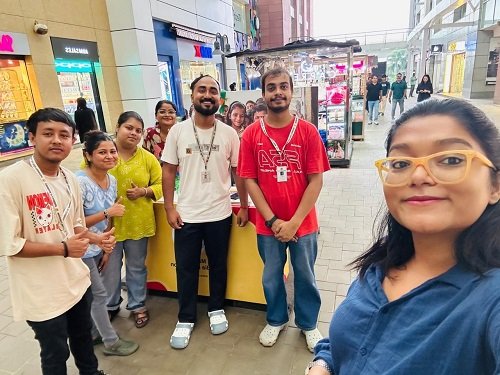
Magic Bus India Foundation celebrated Daan Utsav, highlighting how sustained individual giving supports young people through education, skilling and livelihoods
The How India Gives 2025–26 study estimates that 68% of Indians give in some form, amounting to around Rs. 54,000 crore annually in household giving. The opportunity now is to build on this generosity and encourage more people to engage with the causes they support over the long term.
For Magic Bus India Foundation, individual giving plays an important role. It creates another way for people to connect with the organisation’s mission of helping young people move from school to work.
Small contributions can add up
In education and skilling, change does not happen overnight. A young person’s journey can include life skills, education, career guidance, employability training and, eventually, access to livelihood opportunities. Supporting that journey requires time and continuity.
This is where regular individual giving can make a difference. A contribution of Rs. 500 a month is Rs. 6,000 a year. If 10,000 people contribute the same amount, together they can create Rs. 6 crore in annual support.
Preity Karandikar, CMO & Individual Giving Head, Magic Bus India Foundation, said, “The future of giving is not just about making a donation. It is about creating a sense of participation. When people understand the journey their contribution supports and can see how their support makes a difference, giving becomes more meaningful. That connection can turn a one-time act of generosity into a sustained commitment to social change.”
“It is not always about how much one person gives,” Karandikar added. “When many people contribute consistently, even smaller amounts can come together to create meaningful impact. A first donation can also be the beginning of a longer relationship with a cause.”
An opportunity for the wider social sector
People want to know who they are supporting, how their contribution is being used and whether it is making a difference. This makes trust, transparency and regular communication increasingly important.
For Magic Bus, the opportunity goes beyond acquiring more donors. It is about building a community of people who believe in the potential of young people and want to support their journey.
For the wider NGO sector, this could mean moving beyond one-time transactions towards deeper, longer-term engagement with individual supporters. The focus needs to be on building lasting relationships that keep them connected to the causes they choose to support.
About Magic Bus India Foundation
Magic Bus India Foundation is one of India’s leading NGOs in education and skilling. Since 1999, the organisation has impacted over 5 million young people across India through scalable and inclusive development programmes.
Magic Bus works with underserved communities to enable young people to complete education, build critical life skills, employability skills, and access sustainable livelihood opportunities. Its programmes focus on creating long-term pathways towards individual agency, economic empowerment, and enabling communities to move out of cycles of poverty.
The Adolescent Programme supports adolescents aged 12–18 through life skills education, Foundational Literacy & Numeracy (FLN), STEAM learning, and future-ready skills. Implemented across 22 states and Union Territories, it is strengthened through partnership with 10 state governments and NITI Aayog, and has reached over 40 lakh adolescents, with girls accounting for 52% of participants. Its Livelihood Programme equips youth aged 18–25 with transferable life and employability skills reaching over 3.5 lakh youth annually and enabling more than 84% to access sustainable jobs. Young women represent 60% of participants. The Rural Livelihood Programme strengthens entrepreneurship among peri-urban and rural communities by strengthening life skills, leadership, and entrepreneurial skills, and has supported the creation of over 2,500 entrepreneurs, 96% of whom are women.
For more information, visit: www.magicbus.org