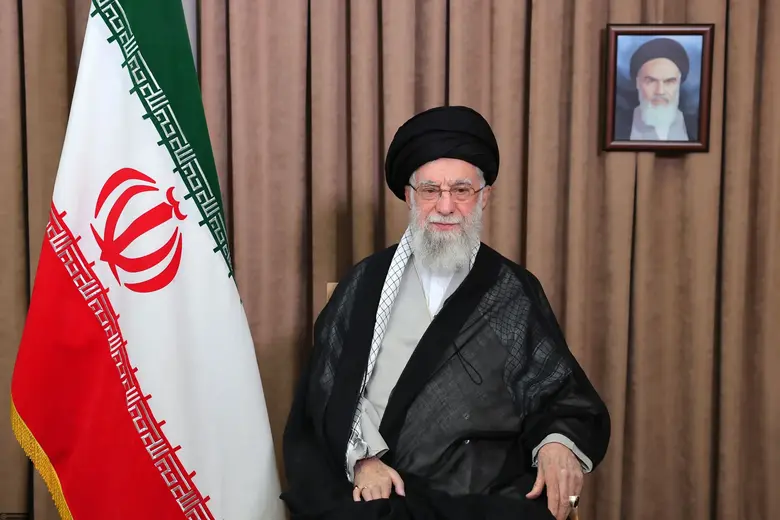
After the assassination of Supreme Leader Ali Khamenei, the United States and Israel have crippled Iran. Iran’s defense leadership has been completely destroyed in airstrikes. Seven officers, including the Defense Minister and the Commander in Chief, were killed in the attacks. Meanwhile, a major revelation has emerged regarding the U.S. attack on Iran. It is claimed that the U.S. intelligence agencies were not in favor of this attack, but under pressure from a Muslim country, Trump took this step.
A major revelation has emerged in international politics regarding the end of the nearly 47 year long Ayatollah rule in Iran. According to a report by The Washington Post, the U.S. military strike on Iran was not solely the result of a security assessment; rather, the pressure from regional allies proved decisive.
The Washington Post report stated that U.S. intelligence agencies had informed President Donald Trump that, at present, there was no direct threat to the United States from Iran. Despite this, the attack was carried out because of continuous pressure from Israel and Saudi Arabia.
Secret Talks of the Saudi Crown Prince, Playing a Double Game
According to the report, Saudi Arabia’s Crown Prince Mohammed bin Salman spoke privately with Trump several times over the past month. These contacts were kept confidential and separate from public forums. Although Saudi Arabia publicly advocated for a diplomatic solution, behind closed doors, the Crown Prince supported military action against Iran. He believed that if action was not taken now, Iran would become even more powerful in the future.
Israel Saudi Joint Strategy
The Washington Post, citing U.S. sources, reported that America’s two key allies in the Middle East, Israel and Saudi Arabia, had jointly lobbied in Washington for several weeks. Their argument was that this was the right time to weaken Tehran’s regional power. These countries feared that if Iran was not stopped, it could become a major threat in the future to Saudi oil facilities and Israel’s security.
Timing and Conspiracy Behind Khamenei’s Assassination
The report also claimed that Iran’s Supreme Leader Ali Khamenei was targeted while he was holding a meeting with his close military and security advisors. Senior officials associated with the Iranian Revolutionary Guard were also present. Sources said that the operation was based on long-term planning and intelligence, but the final decision was made under pressure from allied countries.
Fear of Backlash in Muslim Countries
Following the release of this report, concerns are rising that Saudi Arabia’s role could spark anger in several Muslim countries. On one hand, Saudi Arabia publicly advocated for peace and dialogue, while on the other, it encouraged the U.S. to carry out military action. Analysts believe that this revelation could create new tensions in Middle Eastern politics and further complicate Iran-Saudi relations.
Questions Raised About U.S. Foreign Policy
The attack on Iran is being seen as a major and unexpected turn in U.S. foreign policy. According to the report, this move was not based solely on American security interests; the strategic concerns of allied countries also played a key role.