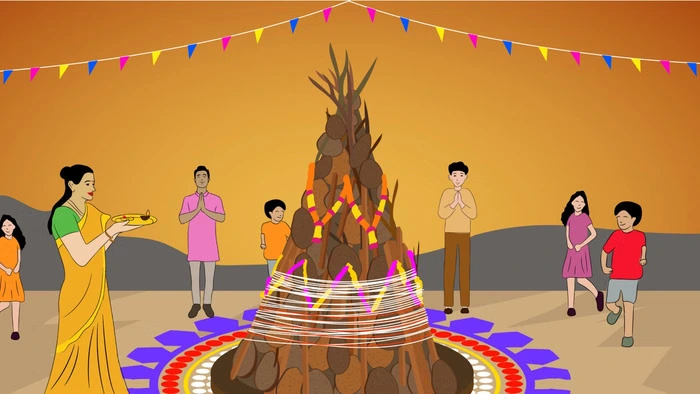
Holika Dahan: This year, there is some confusion regarding the date of Holika Dahan due to the Panchang and a lunar eclipse. Phalguna Purnima will begin on March 2 at 5:55 PM and end on March 3 at 5:07 PM. According to scriptures, Holika Dahan is performed only when Purnima (full moon) falls during Pradosh Kaal. Based on this, Holika Dahan will be celebrated on March 2, 2026.
This time, there is confusion regarding the date of Holika Dahan. Due to differences in Panchang dates and the lunar eclipse occurring at the same time, many people are unsure whether Holika Dahan will be on March 2 or March 3. According to the Hindu Panchang, Phalguna Purnima begins on March 2 at 5:55 PM and continues until March 3 at 5:07 PM. Based on this, Holika Dahan will be celebrated on March 3, 2026.
Holika Dahan Puja Vidhi (Method of Performing Holika Dahan Rituals)
- On the day of Holika Dahan, wake up during Brahma Muhurat in the early morning, take a bath, and wear clean clothes.
- After this, take the vrat (fast) resolution and pray in your heart to God, asking that this puja bring happiness, peace, and prosperity to your family.
- Clean and tidy the place where Holika Dahan is to be performed, and arrange the Holika pile there by decorating it with wood, cow dung cakes, and other items.
- Collect the following items for the puja: roli (vermillion), akshat (unbroken rice), flowers, garlands, coconut, raw thread, turmeric, gulal (colored powder), wheat ears, barley, chickpeas, cow dung cakes, and water.
- In many places, Holika and devotee Prahlad are also represented symbolically. During the puja, Lord Narasimha is remembered, as he is considered the protector of devotee Prahlad.
- Perform the Holika puja properly during the auspicious muhurat (Shubh Muhurat).
- Wrap raw thread (kaccha soot) around the Holika, offer roli and akshat (vermillion and unbroken rice), and pour water over it.
- After this, ignite the fire in the Holika.
- After the fire is lit, circumambulate the Holika three or seven times with the entire family.
- While circumambulating, offer ears of wheat, barley, and chickpeas into the fire. This is considered a symbol of a new harvest and prosperity.
- After the Holika fire has completely burnt out, the ashes are considered auspicious.
- People bring this ash home and either apply it as a tilak or keep it in a safe place. It is believed that this removes negative energy and brings positivity into the home.
- If there is a Vastu defect in the house, keeping a small amount of the Holika ash in the Agneya corner (southeast direction) is believed to be beneficial.
- According to tradition, it is considered auspicious to eat only after having a glimpse of the Holika fire.
What to Do on the Day of Holika Dahan
- In the morning, take a bath, wear clean clothes, and make an auspicious resolution (shubh sankalp).
- Perform the Holika Dahan puja properly according to rituals during the auspicious muhurat (Shubh Muhurat).
- Keep the children enthusiastic and teach them a message of courage and positivity.
- Prepare traditional dishes at home such as poori, kheer, malpua, halwa, and kachori.
- Take the prasad and meal together with the entire family.
- On this day, worship Lord Hanuman and pray for happiness and prosperity.
- In the evening, view the moon together with your family.
- It is considered auspicious to eat only after having a glimpse of the Holika Dahan fire.
Religious Significance of Holika Dahan
The tradition of Holika Dahan is linked to the story of devotee Prahlad and his father Hiranyakashipu. Hiranyakashipu was a demon king who considered himself superior even to God, while his son Prahlad was a devoted follower of Lord Vishnu.
The father repeatedly tried to force Prahlad to abandon his devotion to Vishnu, but Prahlad remained steadfast. In anger, Hiranyakashipu sought the help of his sister Holika, who had a boon that fire could not harm her. According to the plan, Holika took Prahlad on her lap and sat in the fire.
However, by the grace of Lord Vishnu, Prahlad remained unharmed, and Holika herself was burnt to ashes. This event symbolizes that truth and devotion always triumph, while ego and unrighteousness inevitably face destruction.