New Delhi [India], August 25: As enterprises generate and retain increasing volumes of business critical data, the choice of cloud storage infrastructure is becoming an increasingly strategic decision. Beyond storage capacity, organisations are evaluating data sovereignty, ransomware resilience, interoperability, cost predictability and the ability to maintain business continuity.
Against this backdrop, Stornox is positioning its geo-distributed, S3-compatible cloud object storage platform as an alternative for Indian enterprises looking for locally hosted infrastructure with enterprise-grade security and compatibility.
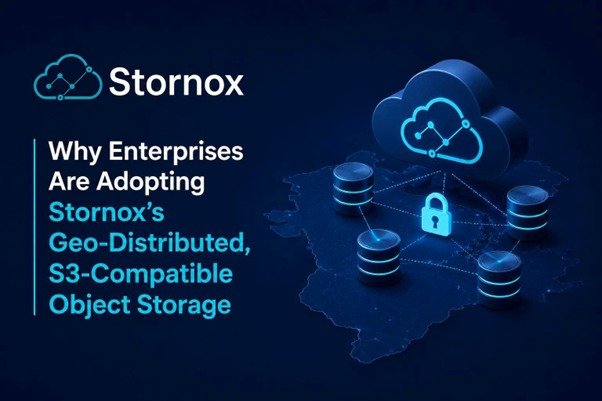
Stornox is designed around a geo-distributed architecture in which encrypted data shards are distributed across geographically defined nodes within India. According to the company, no individual node holds a complete file, while the architecture is designed to support resilience and automatic recovery in the event of infrastructure failures.
A key feature of the platform is its S3 compatibility. Stornox says its platform supports the S3 API and can integrate with commonly used enterprise backup and storage tools, including Veeam, Nakivo, Synology, QNAP, Rclone, AWS CLI, Rubrik and Commvault. This approach is intended to allow enterprises to adopt object storage without redesigning their existing storage workflows.
Security is another central component of the platform. Stornox states that it uses client-side AES-256-GCM encryption and a zero-knowledge architecture, with encryption keys remaining under the customer’s control. The platform also supports S3 Object Lock and versioning for immutable backup use cases.
For enterprises operating in regulated environments, data residency is becoming an important consideration. Stornox says its infrastructure is geo-fenced to Indian locations, allowing customers to select Indian data centres for storage and maintain India-based data residency. The company positions this architecture as being designed to support organisations preparing for India’s evolving data protection requirements.
Cost predictability is another area where Stornox is seeking to differentiate itself. The company offers flat INR-based storage pricing and says enterprises can achieve savings of up to 40% compared with hyperscale cloud storage, depending on usage and associated transfer costs. Such savings claims should be evaluated against an organisation’s individual workload and total cost of ownership.
With enterprises increasingly balancing cloud flexibility with security, compliance requirements and cost control, geo-distributed object storage could become an important component of India’s evolving cloud infrastructure landscape.
For more information, visit Stornox.